Join Nature Notes-What are you or have you seen and enjoyed in nature? It can be from your own backyard, the local park, out on a hike or anywhere. What plants and animals catch your interest? Do you garden? Have you read a good book on nature?

*****
We gave had a canada goose pair nest in our yard for the past 4 years. Geese pair up but don’t usually nest until the age of 3 or 4.
This pair I call “the gooselings” nested the first time and the nest was washed away when the pond flooded. The second year they hatched 3 goslings and it was clear that they were new as the gander-male looked startled when they went into the water and swam up to him.
The third year which was last year, they laid and hatched 7 goslings and all made it to flight.
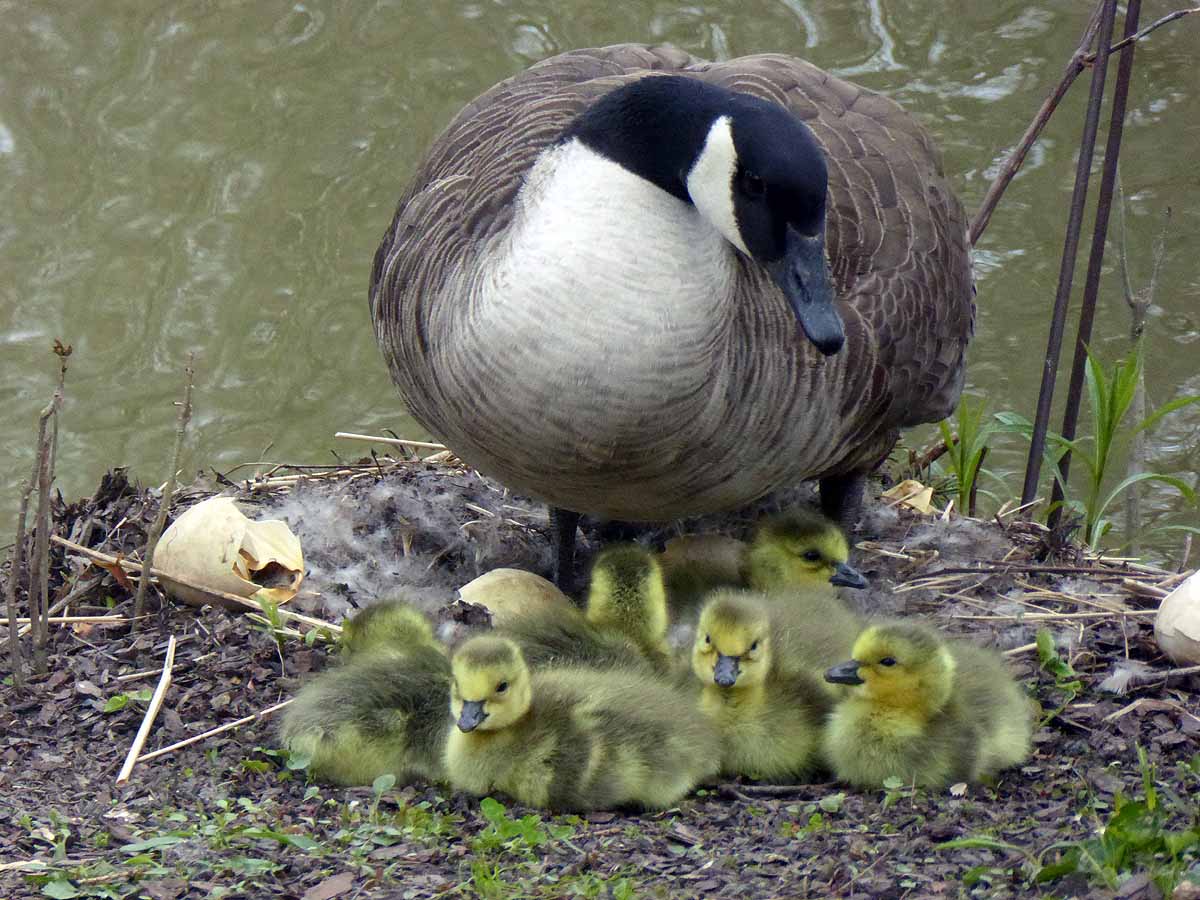
goslings 2020
This year. The goose lays one egg a day or so until she completes her nest 2-8 eggs and only then starts to sit on them so that they all hatch at the same time a month or so later.
She will gather whatever is close to her and use it along with feathers pull out from her breast. Female geese return to where they hatched bringing the male even if it is away from water or near people.
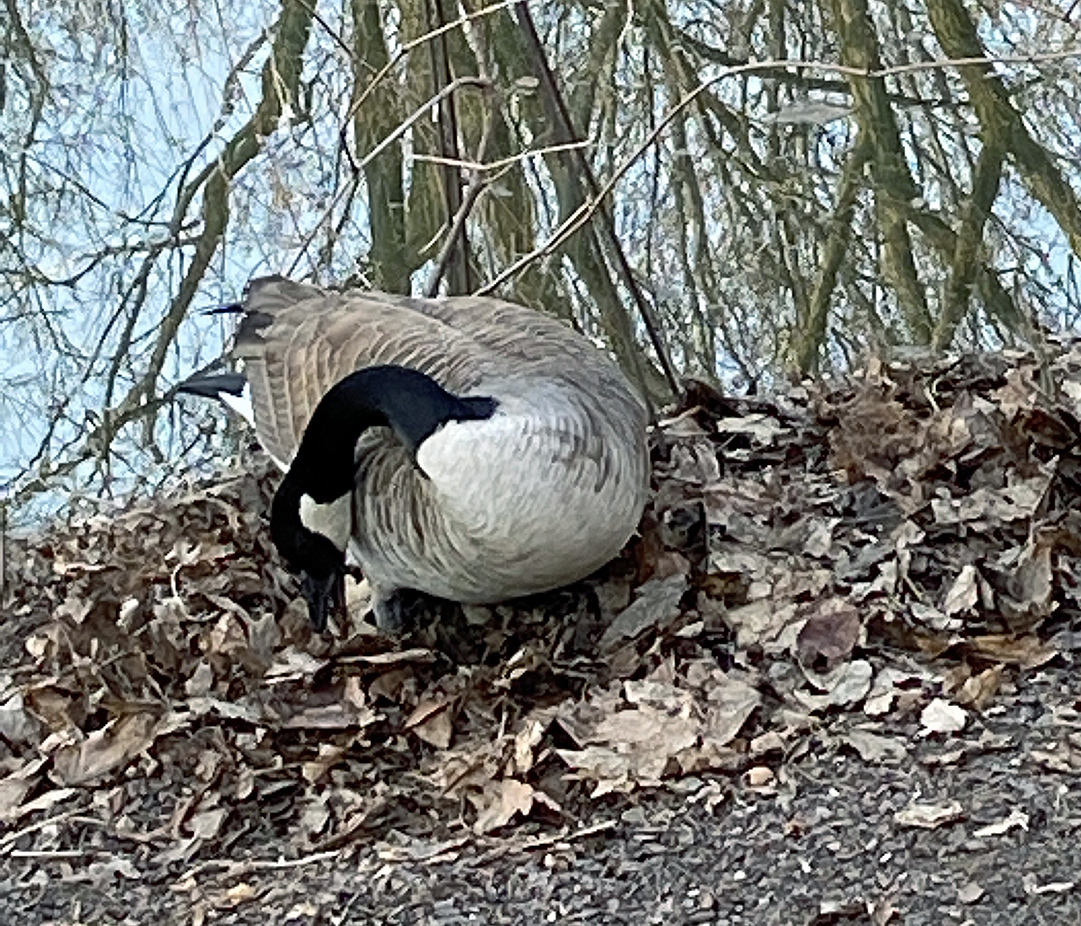
goose making her nest
The goose rarely leaves the nest and carefully turns all the eggs frequently so they don’t stick and all stay warm. Only the female sits in the eggs. This is from my trail cam at night in my yard.
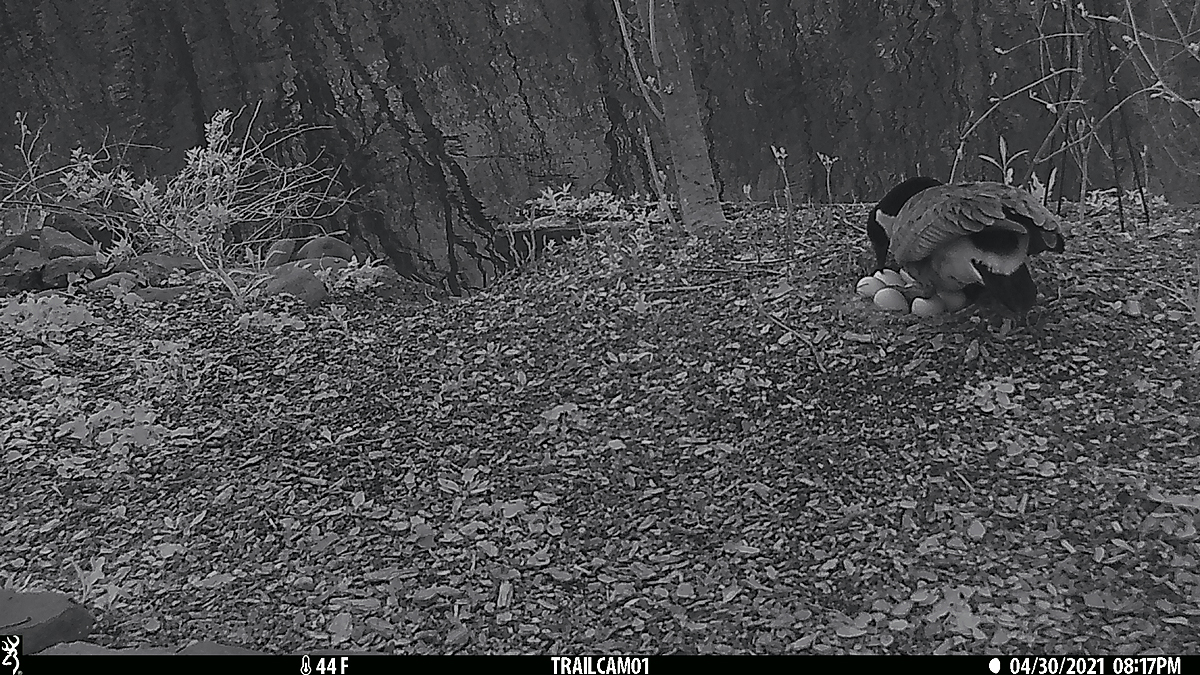
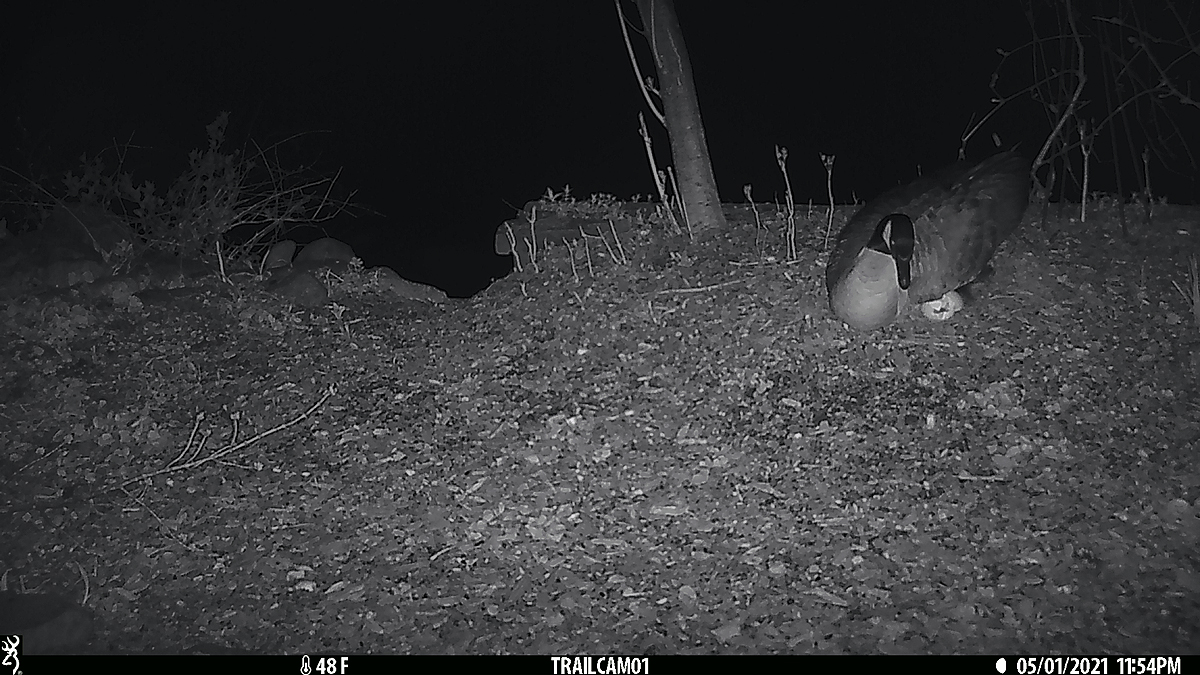
This is from the night that the goslings hatched after I was able to determine later. It can take 25 hours for the chick using an “egg” tooth to pip and open all the way around that egg. It is an exhausting time, but they have a yolk sac that will keep them nourished for the first 24 hours after hatching. Under her you can see some goslings and a piece of an egg.
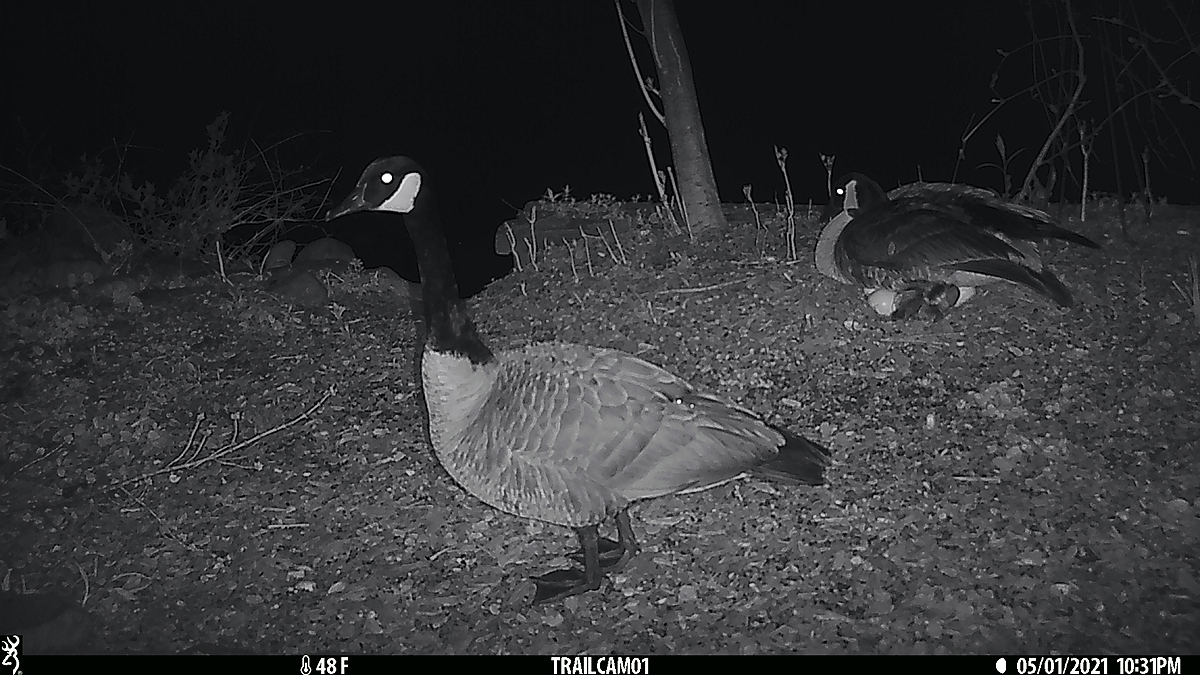
Female on the nest and the male is crossing in front
The next morning it became clear that there were only 3 goslings hatched from the 8 eggs.
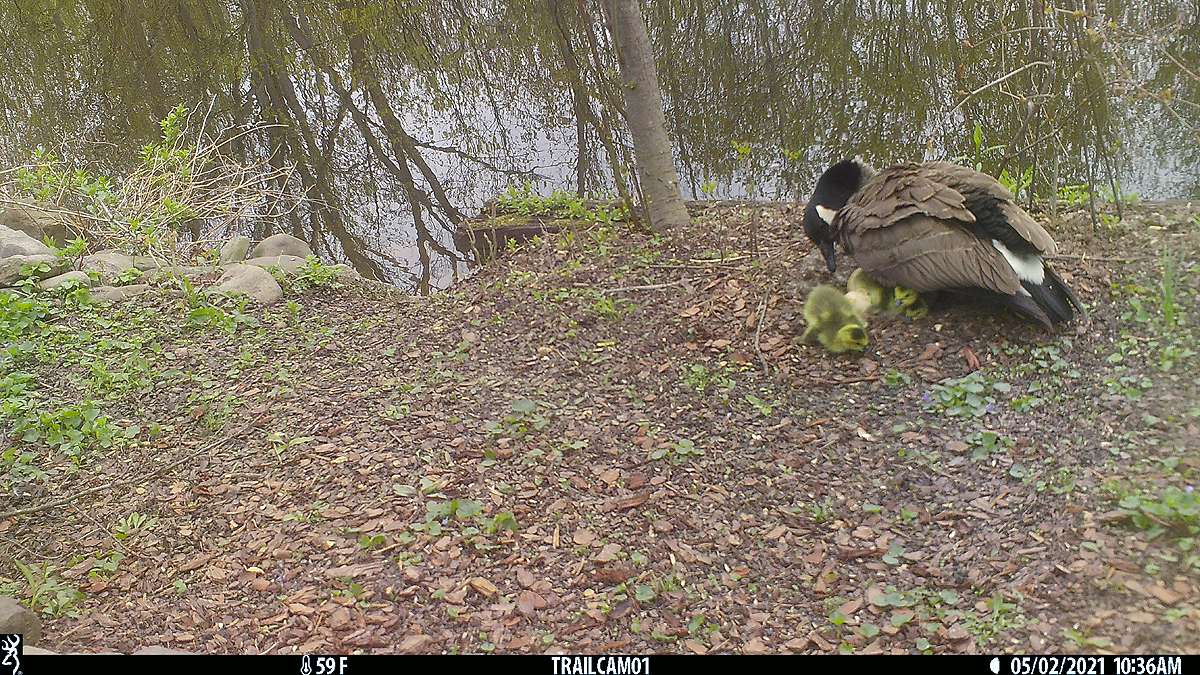
Trail Cam photo of early morning with 3 goslings

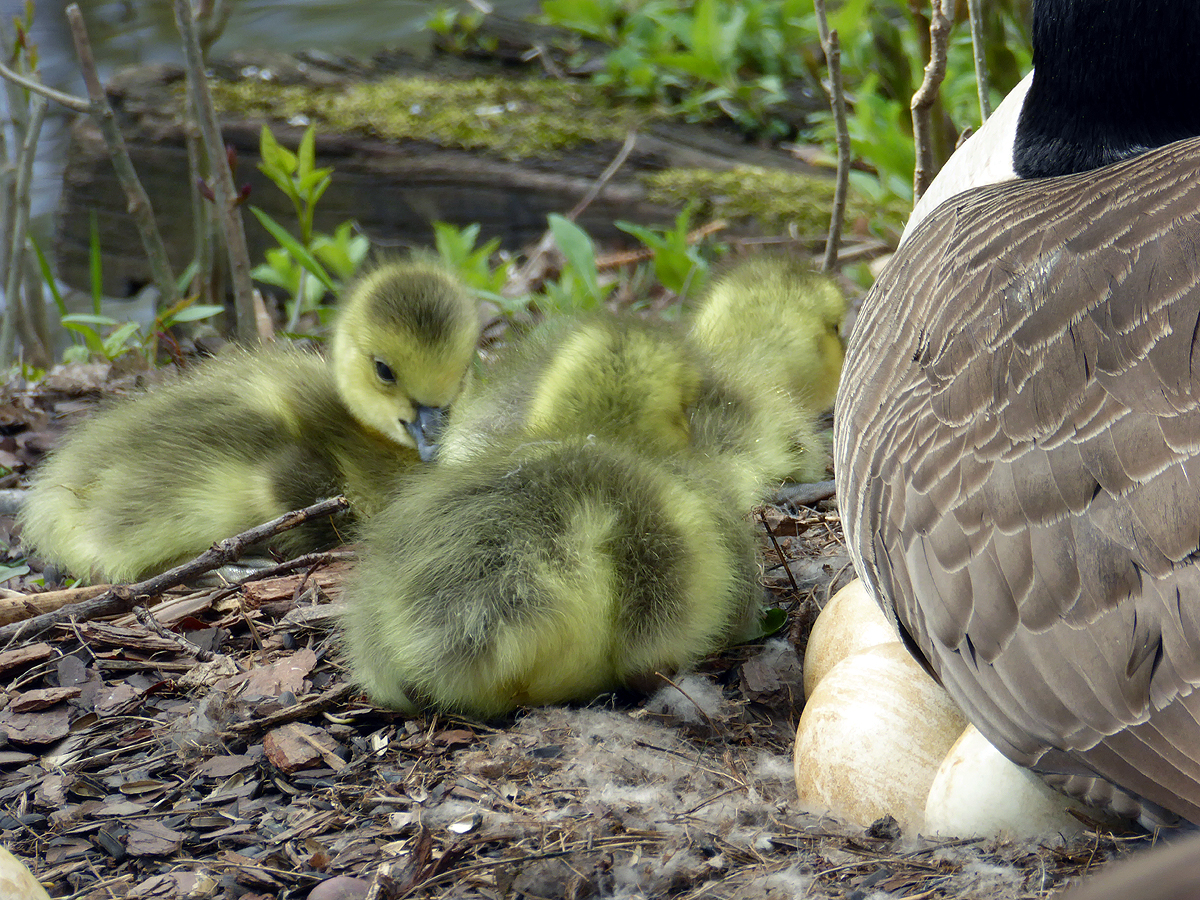
The goose continued to sit on the nest and turn the unhatched eggs through that day and into the next morning.
The goose is talking to the chicks in the egg before they hatch. The unhatched chicks are peeping back at her. Gosling imprint or accept as a parent what they see first so it is important they see and know the sound of their Mother’s voice.
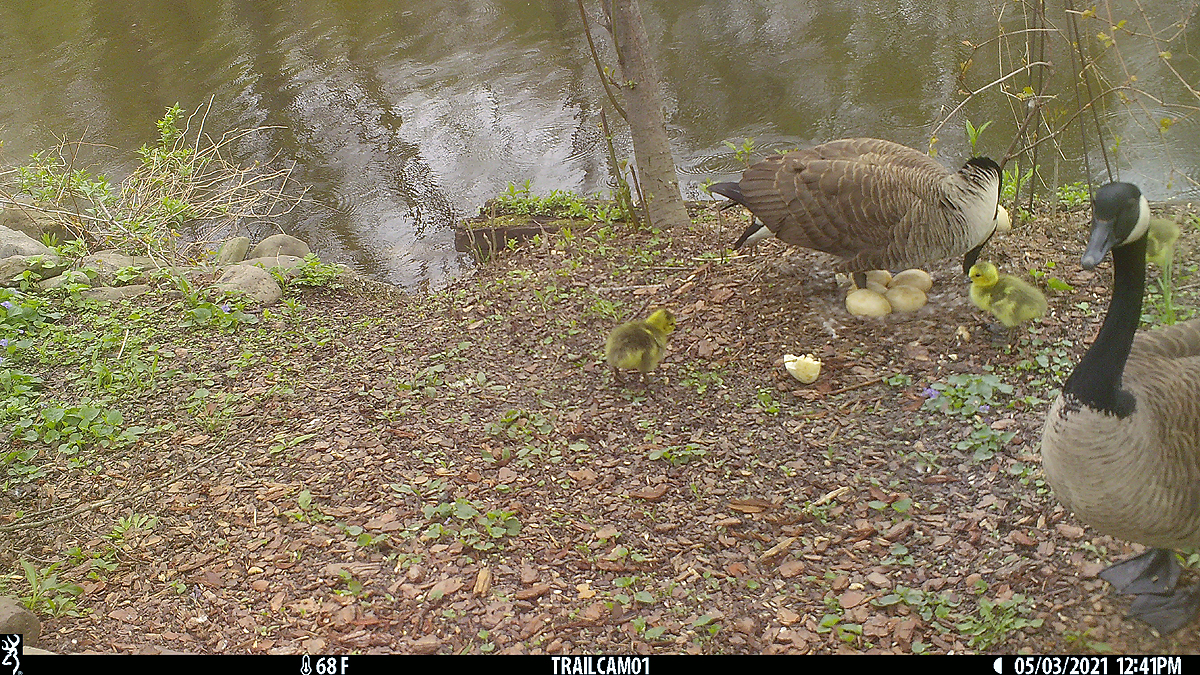
I was getting concerned as I knew the 3 goslings had to be taken to the water and to eat and that there were no more goslings to hatch. At around noon, she vocalized and seem to listen to the 5 eggs and then went away not to return which was sad.
It was a very cold May with some record low temperatures and she is was not as shielded as some who nested in the woods. I don’t know if that was the reason or if the eggs weren’t viable, but they were very heavy when we removed them.
More sadness when the 3 goslings became one gosling within 2 days. 40% of hatchlings don’t make it through the first year but I have seen pretty good success in the 16 years I have watched geese here. You can tell that some nests must have had some eggs oiled so they wouldn’t hatch which you can do on your own property, but there is a family with 6 goslings today.
My 6-year old grandson was here and watched her on the nest and enjoyed seeing the photos and we Facetimes with him, but he didn’t remember that there were 8 eggs so I didn’t have to explain that to him.

Have a wonderful nature-filled week! Please be safe.








 ramblingwoods.com