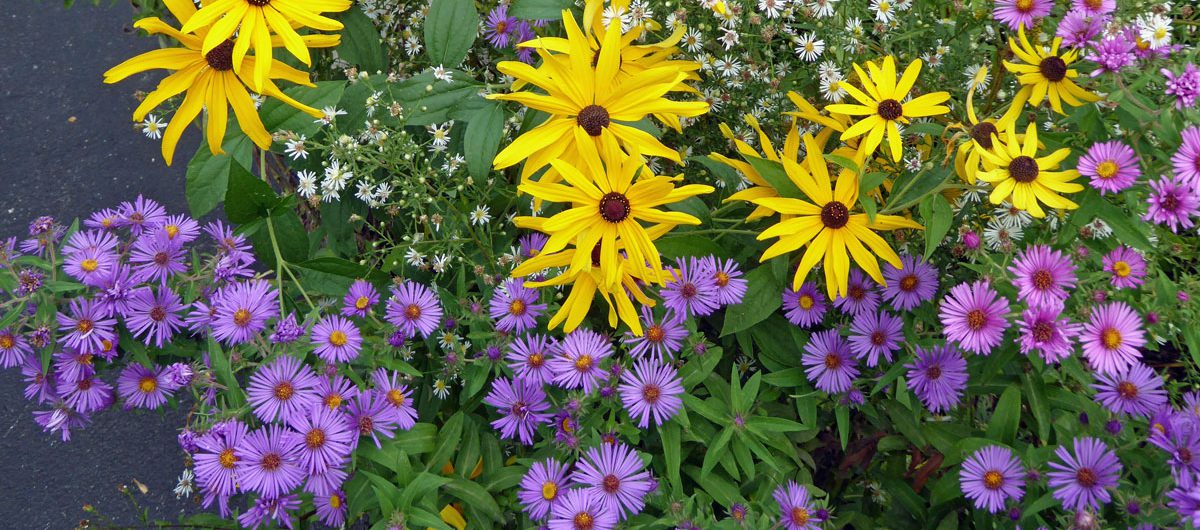

Join Nature Notes Tuesday at 12:00 am EST to Friday at 11:00 pm EST. More information can be found at the top of the blog on a separate page, but it really is easy. What are you or have you seen and enjoyed in nature? It can be from your own backyard, the local park, out on a hike or anywhere. What plants and animals catch your interest? Do you garden? Have you read a good book on nature? Write a blog post with a photo, a story, a poem, anything goes because I love to see what Mother Nature is up to in your area. Please submit one blog post per week and link back to nature notes in some way.
| 1. | Shiju Sugunan | 5. | orchid( Japan) | 9. | islandrambles |
| 2. | Two For The Road | 6. | Birgitta B. | 10. | betty – NZ |
| 3. | Pictografio | 7. | Raquel Jimenez | 11. | Z for ZOOLOGY |
| 4. | Day One |
—
Damselflies are insects of the suborder Zygoptera in the order Odonata. They are similar to dragonflies, which constitute the other odonatan suborder, Anisoptera, but are smaller, have slimmer bodies, and most species fold the wings along the body when at rest.
It went from cold and rainy to beastly hot and humid with high heat warnings. Today was the first day I was able to sit on my deck with cool enough temperatures that I wouldn’t over heat and a breeze to keep the bugs away… But it is July already.
Then I love to walk around the yard and look at the wildlife that is visiting…Something caught my eye and I had my camera in my pocket… Tiny…..In the grasses along the driveway..

A flash of green caught my eye and I found a tiny damselfly hanging on to one of the grasses….
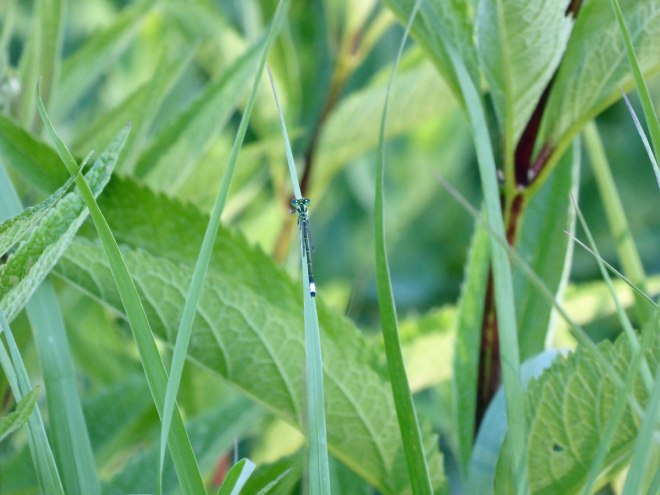
You can see how large the other plants leaves look in comparison. And this was in the front yard, not the back where the pond is. It is a fragile forktail (Ischnura posita) and the “forktail” comes from tiny projections off the tip of males’ abdomens, which help to identify the species. The length of the body varies from 0.8 to 1.1 inches.
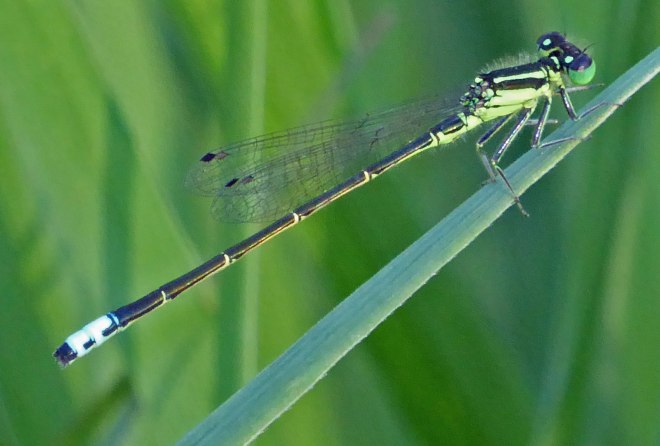
It is in the Pond Damselfly (Coenagrionidae) family that encompasses most of the common damselflies seen at ponds and other still waters. However, some species, particularly Dancers, prefer a stream habitat. Coenagrionidae tend to be smaller, shorter-legged and often more brightly colored than other damselflies. Some present a real challenge for field identification because they demonstrate color changes with age, and/or two or three color forms of females.

Nature walks are wonderful. But you don’t have to travel to special location to enjoy Mother Nature. There is so much to see in your own neighborhood or even in your own back or front yard. Get a guide-book of the wildlife in your area and learn the calls of birds and frogs and toads. So many times I hear a bird that lets me know what I am looking for in the trees.
 ramblingwoods.com