Nature Notes (#515)-The Front Yards Gardens…..

Join Nature Notes-What are you or have you seen and enjoyed in nature? It can be from your own backyard, the local park, out on a hike or anywhere. What plants and animals catch your interest? Do you garden? Have you read a good book on nature?
************************************************

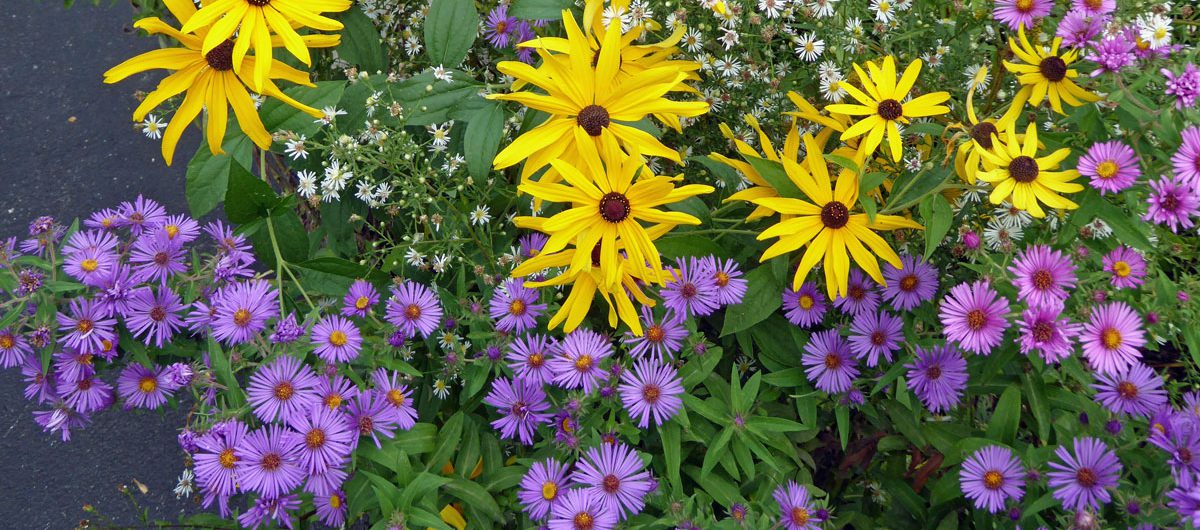
We moved here in 2004. I had not gardened at out other house and didn’t plan on it here. But as I spent more time outside, around the pond and woods I decided to do something to help wildlife. I took some nature classes and read up on pollinators and decided to make our yard a wildlife habitat.

That started a years-long process looking for someone who could plan and bring the gardens to life.

Here is the house when we bought it with the typical grass lawn and a few plants…

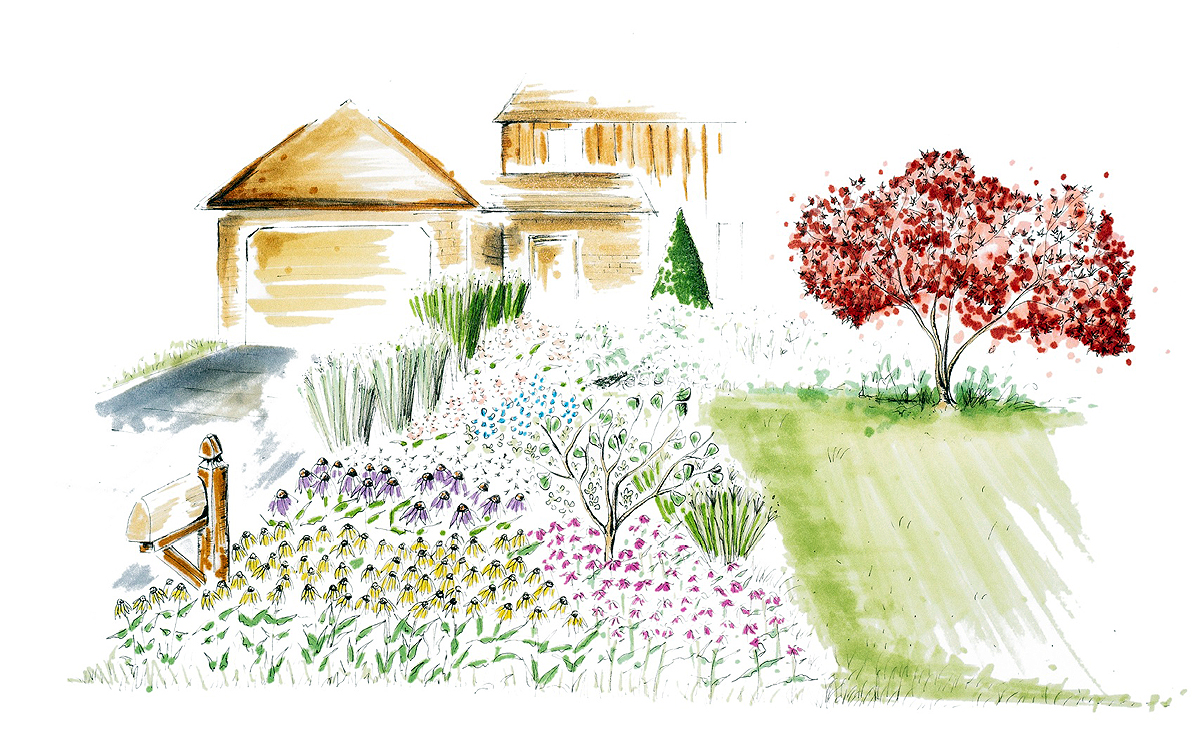
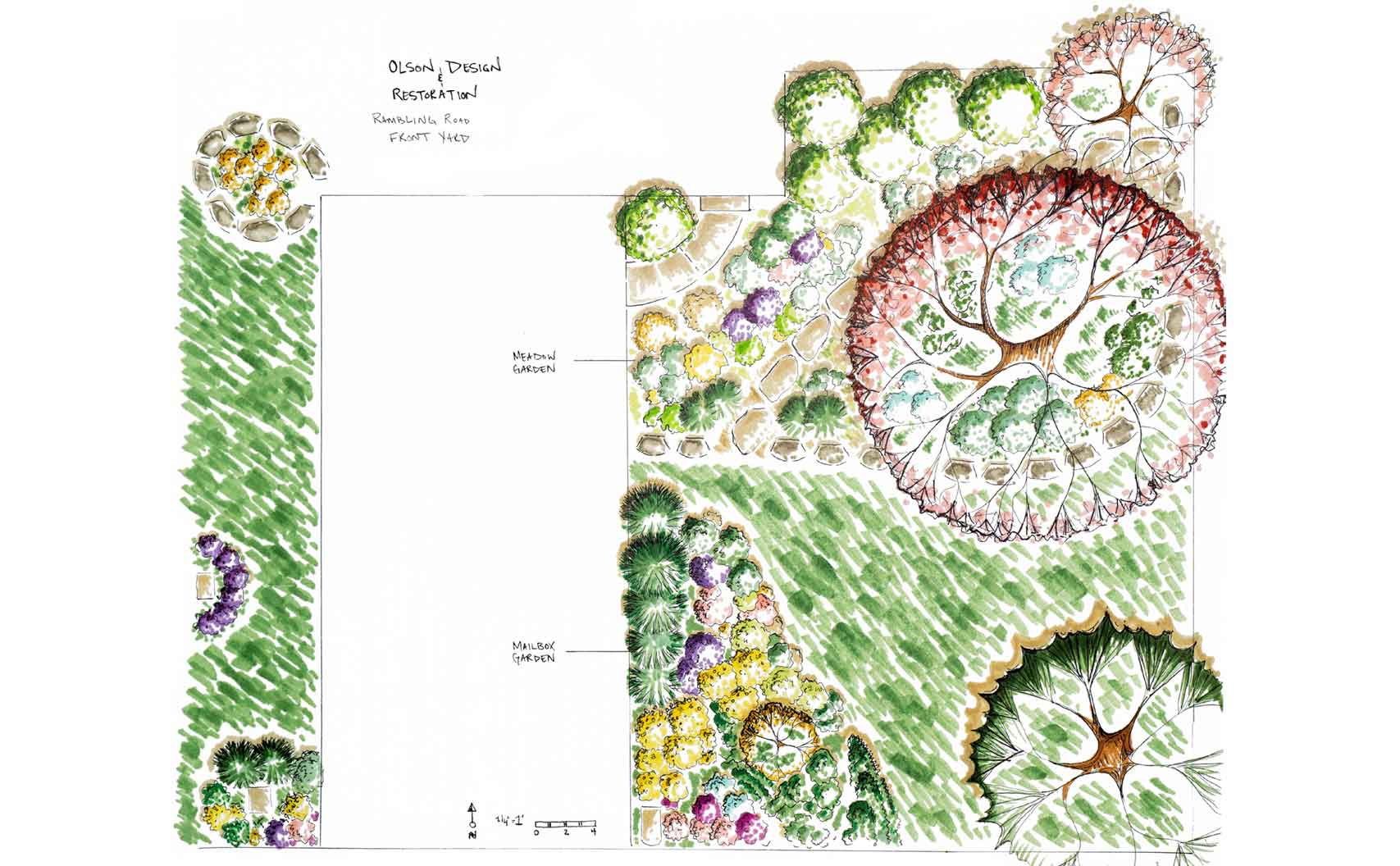
Here are part of the plans for a front yard garden.
 
The plan called for planting an interesting but also useful garden. It made the lawn space much smaller.
There would be a curving front planting with many grasses, a small tree and many plants. There would be blooms from early spring though fall. 


Then we put in a “meadow garden” to mimic a wildflower garden with a slate stone pathway closer to the house.

The gardens are still filing in and some plants overtake others but it is all according to Mother Nature’s will.

My immediate neighbors have expressed that they don’t like it as they prefer just grass lawns, but they can’t do anything about it. But there are people especially with children who love the flowers and come to walk the slate pathway and watch the bees and butterflies.

There is a lot of cover for rabbits, fledgling birds who can’t fly well yet and toads and some frogs. It really is a wildlife habitat in a suburban neighborhood.

Have a wonderful nature-filled week! Please be safe.


Nature Notes (#514)-Nature is slow, but sure; she works no faster than need be; she is the tortoise that wins the race by her perseverance.~Henry David Thoreau

Join Nature Notes-What are you or have you seen and enjoyed in nature? It can be from your own backyard, the local park, out on a hike or anywhere. What plants and animals catch your interest? Do you garden? Have you read a good book on nature?


1. Secret Garden 5. Cloudia Honolulu 9. SCRYING POOL
2. Pat — Colorado 6. orchid( Japan) 10. craftygreenpoet
3. Pictografio 7. Shiju Sugunan    
4. Sallie (Full Time- Life)

***********************

There are turtles around laying eggs and crossing streets. If you stop to help a turtle, place it in the direction it was going. Turtles do have a home range and know where they need to be which is why relocating them as some people do is a bad idea…

There are 11 species of turtles in New York. We have freshwater, saltwater for turtles. I won’t be seeing any sea turtles in the pond. 

I haven’t learned as much about them except for the common snapping turtle that I see during egg-laying season and in the pond on occasion. They do take a toll on young waterfowl

COMMON SNAPPING TURTLE

Geographic Range

The snapping turtle’s range stretches from S. Alberta and east to Nova Scotia in the north, extending south all the way to the Gulf of Mexico and into central Texas.

Habitat

Snapping turtles only live in fresh or brackish water. They prefer water bodies with muddy bottoms and abundant vegetation because concealment is easier.

snapping turtle in the pond

Food Habits-Snapping turtles will eat nearly anything that they can get their jaws around. They feed on carrion, invertebrates, fish, birds, small mammals, amphibians, and a surprisingly large amount of aquatic vegetation

common snapping turtle

Lifespan/Longevity-In the wild snapping turtles are estimated to live up to 30 years. Snapping turtles are most vulnerable as hatchlings. Once they reach a certain size there are few natural predators of snapping turtles, though they are often hit by cars when searching for new ponds or nesting sites. In captivity they can live up to 47 years.

common snapping turtle hatchling

The Common snapping turtle is remarkably cold-tolerant. Radiotelemetry studies have shown some individuals do not hibernate but remain active under the ice during the winter.Hibernating snapping turtles do not breathe for, in the northern part of their range, more than six months since ice covers their hibernating site. These turtles can get oxygen by pushing their head out of the mud and allowing gas exchange to take place through the membranes of their mouth and throat.


Behavior

Snapping turtles are not social creatures. Social interactions are limited to aggressive interactions between individuals, usually males. Many individuals can be found within a small range; snapping turtle density is normally related to the amount of available food. Snapping turtles can be very vicious when removed from the water, but they become docile when placed back into the water. Snapping turtles sometimes bury themselves in mud with only their nostrils and eyes exposed. This burying behavior is used as a means of ambushing prey.

snapping turtle returning to the pond after egg laying

Mating

Snapping turtles mate between April and November, and are most active in breeding during warmer months. They begin courtship by facing one another and moving their heads from side to side. Mating begins with the male mounting the female and adjusting his tail beneath the female’s to allow the cloacal openings to touch. A female snapping turtle may keep viable sperm in her body for several years, so that eggs are fertilized even in years when she does not mate.

Nesting and Incubation

A female snapping turtle will typically lay her eggs in early summer. She chooses a nesting site in an area of loose soil, sand, loam, vegetation debris or sawdust, where she digs a nest 4 to 7 inches deep. She will lay 20 to 40 soft-shelled, cream-colored eggs roughly the size and shape of a table tennis ball. Many snapping turtle nests are destroyed by predators such as minks, raccoons and skunks.

Hatching

Hatchlings will emerge from their soft shells 55 to 125 days after the mama snapping turtle lays the eggs. Hatchings emerge between August and October. Occasionally, hatchlings don’t emerge from their eggs until the following spring.

The hatchling snapping turtles are typically around an inch long when they emerge from their shells. Males reach reproductive maturity at around 5 years, when their upper shell, or carapace, reaches about 6 inches long. Females reach reproductive age at between 4 and 7 years.

Sex Determination

As with many reptile species, egg temperature during a critical stage of embryo development determines the gender of the snapping turtle hatchling. According to Scientific American, cooler temperatures at that stage produce males, while eggs incubated in warmer temperatures will produce females.

snapping turtle hatchling 2008

Have a wonderful nature-filled week! Please be safe.


Nature Notes (#513)-For us in the minority, the opportunity to see geese is more important than television.~Aldo Leopold

Join Nature Notes-What are you or have you seen and enjoyed in nature? It can be from your own backyard, the local park, out on a hike or anywhere. What plants and animals catch your interest? Do you garden? Have you read a good book on nature?


It has been a very hot June which doesn’t agree with my MS, but we got to spend time with our grandson which was wonderful. Blake is six now and brought his favorite insect books with him so we could discuss. Below he found a lady beetle on the lavender he wanted to show me.


In between, there were two canada geese that were rescued. One gosling was left by its parents and we netted it, but the SPCA said it was left because it was having seizures and had to be euthanized.
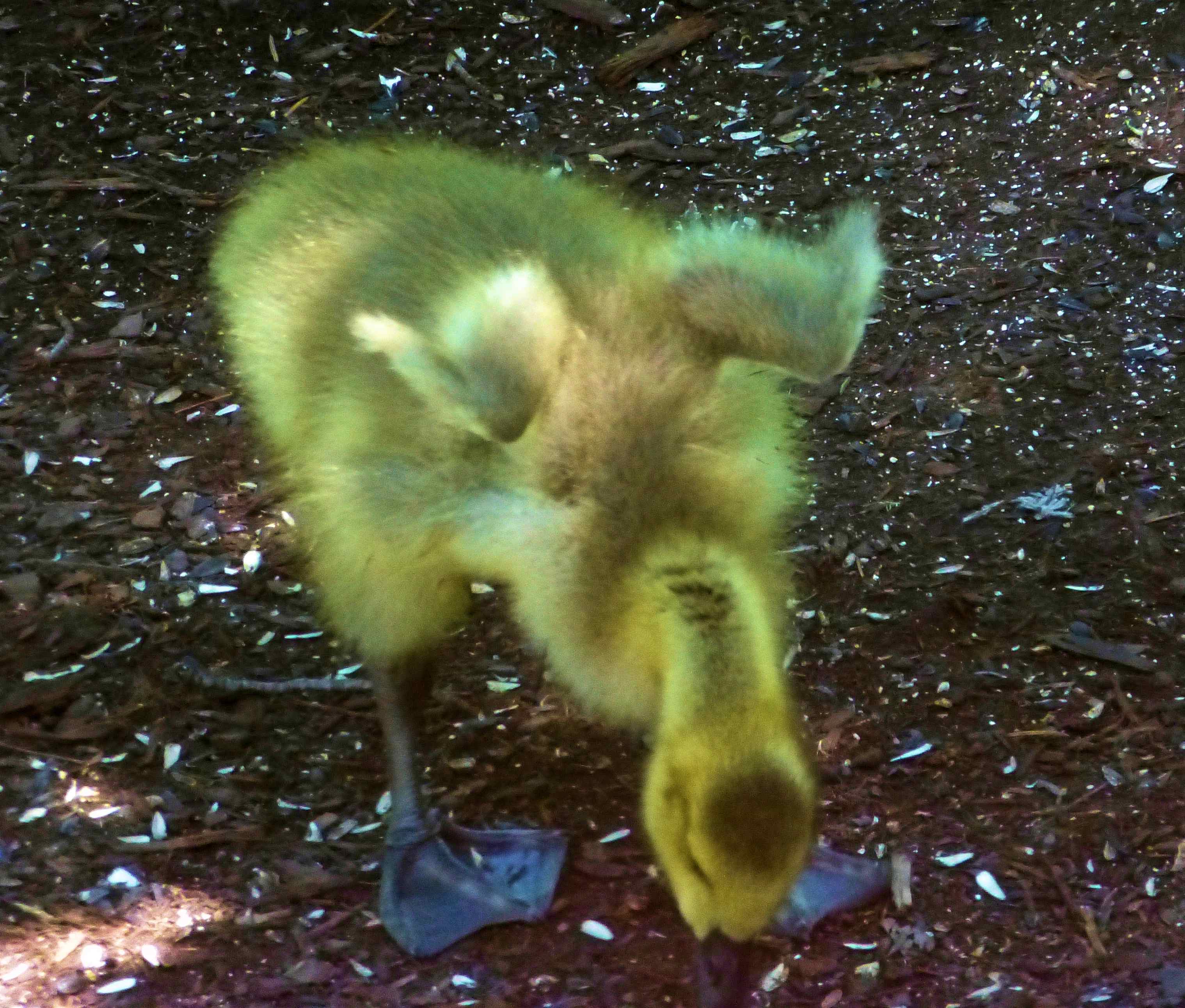
Sadly the pair that nested in my yard the past 4 years did not do well. Out of 8 eggs of which only 3 hatched there is only one gosling. Then I found the male or gander injured in the yard and he too was euthanized.

Below last year when they raised 6 goslings….

The goose and the one gosling this year…She will probably choose another mate after she mourns her mate. She will bring him to our yard to nest as it is the female who is loyal to her natal grounds. I really got to watch this pair and was very sad to lose the male. 


I have rescued other Canada geese who were injured or sick. In the case of pairs, the other mate stayed with that goose and in that area long after the injured goose was removed. I think of the 4 adults we have rescued only one was able to be rehabbed and released. That was a leg caught in fishing line.

Once you really open your eyes to nature and wildlife, you can’t go back. I can’t let an animal suffer if I can do something about it. It is the joy and heartbreak like most things in life…


Six AMAZING THINGS YOU DIDN’T KNOW About Canada Geese:

Canada Geese Mate for Life: Canada Geese, like swans, are monogamous and most couples stay together throughout their lifetime. The average lifespan is 10-25 years. They raise and protect their young together and also protect each other throughout their lives. It is possible that when a goose dies, the survivor may find a new partner.

Canada Geese Mourn: Canadian Geese are very emotional creatures. When a Canada Goose loses its mate or eggs, they have been observed to mourn. They may remove themselves from the flock and stay by themselves and swim around in despair honking mournfully.

Canada Geese are Loyal: Canada Geese are extremely devoted and look out for each other. When a mate is injured or dying, its partner will stay with them, even if the flock is moving on.

Canada Geese Share the Lead: Following the same route year after year, the larger, stronger birds lead their flock to the wintering grounds. The lead position consumes the most energy, and different geese take turns in lead.

Canada Geese Move Quickly: Scientists using radio transmitters have tracked geese that have flown 1000 km in one day.

Canada Geese Communicate: Researchers have discovered Canada Geese have around 13 different calls, ranging from warnings, greetings, contentment calls and honks indicating gathering times. Adults begin communicating with their young while they are still in the egg. When migrating they honk encouragement to each other, and indicate directions.


Have a wonderful nature-filled week! Please be safe.