
Join Nature Notes from Monday at 12:00 am EST to Friday at 11:00 pm EST. More information can be found at the top of the blog on a separate page, but it really is easy. What are you or have you seen and enjoyed in nature? It can be from your own backyard, the local park, out on a hike or anywhere. What plants and animals catch your interest? Do you garden? Have you read a good book on nature?

| 1. | Shiju Sugunan | 6. | Birgitta B. | 11. | YUCCA |
| 2. | Pat — Colorado | 7. | A Green Ridge | 12. | LACEBARK PODS |
| 3. | Lisa | Handmade in Israel | 8. | Sallie | ||
| 4. | Pictografio | 9. | orchid( Japan) | ||
| 5. | Nature Footstep | 10. | craftygreenpoet – snowdrops and mosses |
SIZE RELATIVE TO A 6-FT MAN:
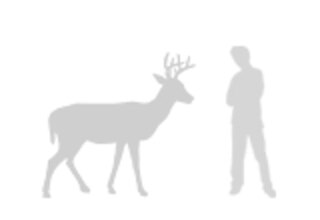
Deer are part of the Cervidae family that include moose, reindeer, elk and other species. White-tailed deer, the smallest members of the North American deer family, are found from southern Canada to South America. In the heat of summer they typically inhabit fields and meadows using clumps of broad-leaved and coniferous forests for shade. During the winter they generally keep to forests, preferring coniferous stands that provide shelter from the harsh elements.
FACTS ABOUT WHITE-TAILED DEER
Information compiled from the book “Whitetail Savvy” by Dr. Leonard Lee Rue III. These are photos that are from that book.
1. Don’t be a fawn-napper
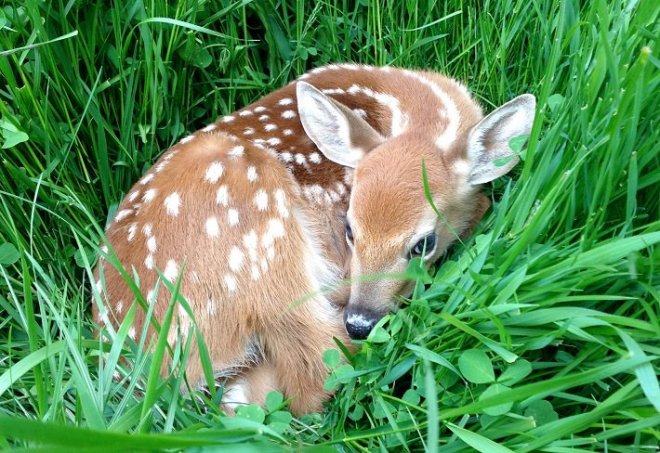
deer fawn
White-tailed Deer fawns are born April through July, with the majority of fawns born in June. Most first-year does will have one fawn each year, but twins or triplets are typically seen thereafter.
Until they are strong enough to keep up with their mothers, deer fawns are left alone while their mothers go off to feed. Mother deer will stay away from the fawns to avoid leading predators to their young. Does return at dawn and dusk to feed and/or move their young.
Fawns are typically left in an area with tall grass or bushes, but sometimes they are left in more open areas, including backyards. Older deer fawn may wander short distances.
Well-meaning humans often assume that because a fawn is alone it must be an orphan, leading to numerous fawn “kidnappings” each year.
2. Deer are well-insulated.

The hollow, reddish-brown winter hair of the deer’s coat provides excellent insulation, preventing loss of body heat, while also keeping the snow from melting. This proves especially useful in Canada and the northern United States.
3. Deer eat a lot.

Being an herbivore has its advantages and disadvantages for whitetails. On average, a deer needs to eat about 8 pounds of vegetation, per 100 pounds of body weight, per day.
A 150-pound deer needs to eat 12 pounds of food in a 24-hour period over most of the year. That’s a lot of acorns and grass!
4. Deer sleep even more.

Over most of the year, whitetails remain bedded 60-70 percent of the time, usually feeding five times every 24 hours.
5. Deer have the same number of teeth as humans.

Like a human, an adult deer has 32 teeth. The wear on an adult’s teeth throughout their lifespan can indicate how old the deer is.
However, a deer has no upper teeth in the front of its mouth; the space is instead filled with a hard-surfaced pad of gristle.
6. A number of factors influence a deer’s antler growth.

A deer’s antlers are a result of three factors: nutritious food, increasing buck age and good genes.
The shape and configuration of the antlers is strictly genetic.
7. Chin whiskers tell deer exactly how far from the ground their lips are when feeding.

Most of their browsing occurs on the forest floor, so deer have a special mechanism for determining their head’s position in relation to the ground.
8. Buck antlers grow quickly.

Adult buck antlers start to grow around the last of March or early April, and grow at the rate of about a quarter-inch per day.
Younger bucks begin growing their antlers a little later, and theirs grow at a slower rate. Deer populations with strong antler growth and development translate to overall good herd health.
9. Sparring isn’t only a matter of establishing dominance.

Sparring is an activity bucks partake in to test one another for dominance, yes. But it also serves to develop the muscles and skills they’ll need if they should actually have to fight during the breeding season, when female deer on in their crosshairs.
Sparring is also a reaffirmation of the status quo in each fraternal group and prevents actual fights from having to take place, which could cause severe injuries, if not death.
10. Bucks put on miles to pursue does.

During the rutting season, a male deer will lose up to 25 percent of its body weight from the constant seeking and chasing of does during mating season.

Have a wonderful nature-filled week! Please be safe.
 ramblingwoods.com
Wonderful photos!
lovely photos and interesting to read about that species of deer
Juliet
http://craftygreenpoet.blogspot.com
WE see mostly mule deer here in Colorado, but all your advice also holds true for them.
how fun, I learned a lot about deer. We had a rabbit in our back yard and occasionally a road runner, lots of lizards cause we live in the desert!
Thanks once again for the wonderful information that you have shared!
When my oldest daughter was just out of her teen years and was just beginning to like me again we went for a walk in a beautiful wood. Almost as soon as we had walked through a large field and had come to the path through the trees we saw two deer. A doe and a fawn. It was as if the world was telling us everything was going to be okay.
What a delightful post! I learnt a lot and the photos are superb.
PS: Thanks for hosting!
I loved seeing these deer almost daily when we lived at the Lake here. Thank you for caring about them.
Sallie…It is a little bit that we do.