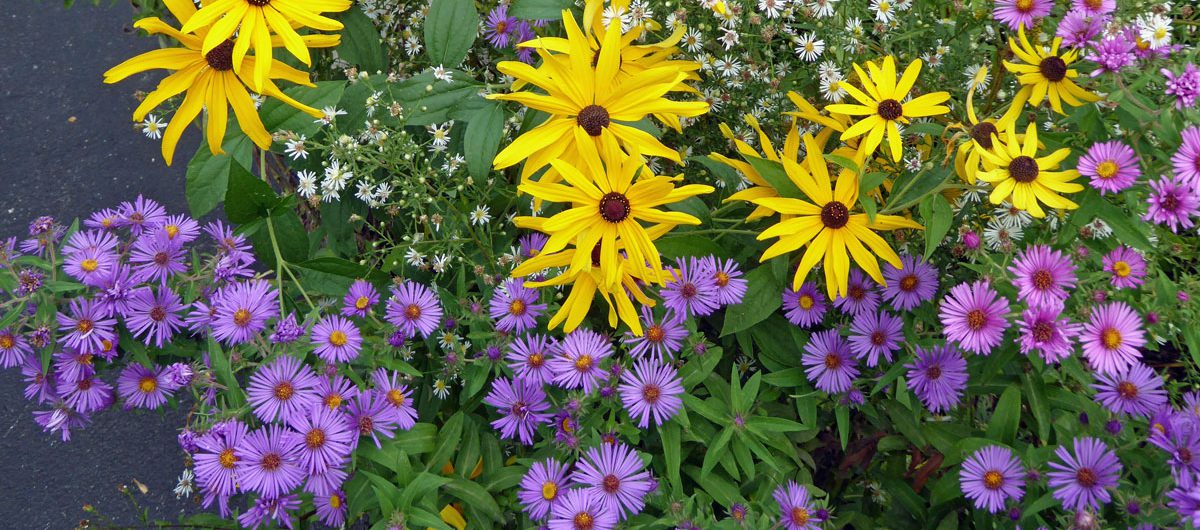

Join Nature Notes from Mondays at 11:00 pm EST to Friday at 11:00 pm EST.
More information can be found at the top of the blog on a separate page, but it really is easy. What are you or have you seen and enjoyed in nature? It can be from your own backyard, the local park, out on a hike, or anywhere. What plants and animals catch your interest? Do you garden? Have you read a good book on nature?
Write a blog post with a photo, a story, a poem, anything goes because I love to see what Mother Nature is up to in your area. Please submit one blog post per week and link it back to Nature Notes in some way..
LAST WEEK’S BLOGGER LINKS-What are you seeing in nature? It can be from your own backyard, the local park, out on a hike, or anywhere. What plants and animals catch your interest? What do you find interesting in nature? Take a photo, write a post, a story, a poem, anything goes because I love to see what Mother Nature is up to in your area. ——
| 1. | Nature Footstep | 6. | SGetaway | 11. | JOY OF CHILDHOOD |
| 2. | Sallie (Full Time- Life) | 7. | A Green Ridge | 12. | SUNBURST |
| 3. | Pat — Colorado | 8. | Birgitta B. | 13. | YOUNG AND OLD |
| 4. | Lisa | Handmade in Israel | 9. | A spirit of simplicity | ||
| 5. | Karen, Pixel Posts | 10. | craftygreenpoet |
I am behind in my visits. I needed to just rest and relax. We had some summer-like temperatures which allowed me to sit on the deck and watch the pond, the ducks and the remaining fall color. I needed that and I feel some sense of refreshment if I totally ignore the pandemic.. Oh 2020…what year….
I was surprised to learn that great blue herons will stay in this area as long as there are open waters for fishing. I remember the first time I saw one flying overheard over 15 years ago with it’s kind of croaky bark call, I was thinking there were still dinosaurs. And really, there are.
Their legs are back and the wingspan is large and it honestly looks prehistoric in flight….

Great Blue Heron Taking Off
BASIC DESCRIPTION
Whether poised at a river bend or cruising the coastline with slow, deep wingbeats, the Great Blue Heron is a majestic sight. This stately heron with its subtle blue-gray plumage often stands motionless as it scans for prey or wades belly deep with long, deliberate steps. They may move slowly, but Great Blue Herons can strike like lightning to grab a fish or snap up a gopher. In flight, look for this widespread heron’s tucked-in neck and long legs trailing out behind.
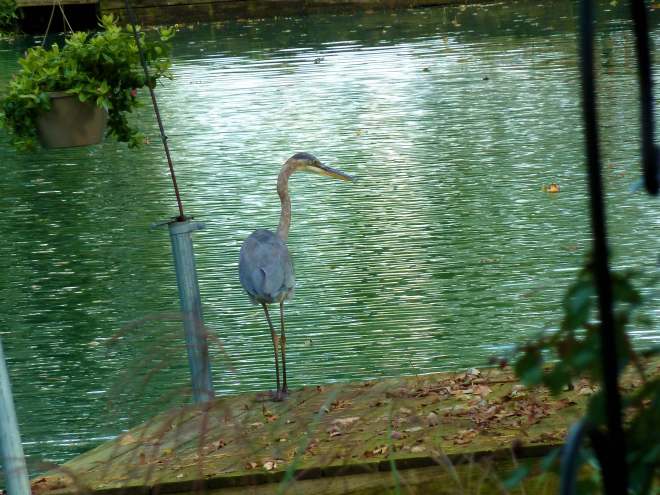
- Despite their impressive size, Great Blue Herons weigh only 5 to 6 pounds thanks in part to their hollow bones—a feature all birds share.
I can attest to this because my husband had to rescue a heron that was caught in fishing line on the pond. He was able to get it in a sheet and we held it till the rehabber came and got it. It was able to be released unharmed. My husband went out and cut the rest of the line and cuts any fishing line that we come across.

Migration
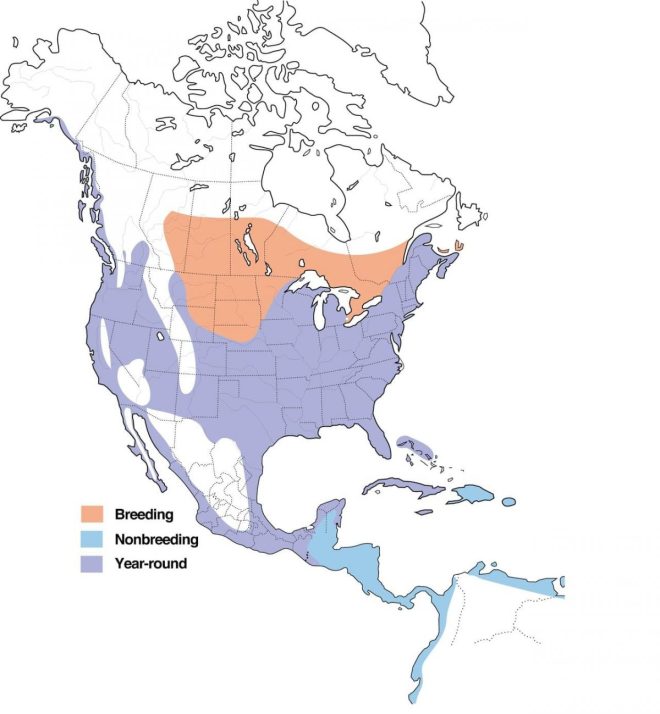
Partial migrant. Great Blue Herons generally move away from the northern edge of their breeding range in winter, with some flying as far south as the Caribbean. Populations in the Pacific Northwest and south Florida are present year-round.
We are between the two Great Lakes on the edge of purple and orange….
- Great Blue Herons in the northeastern U.S. and southern Canada have benefited from the recovery of beaver populations, which have created a patchwork of swamps and meadows well-suited to foraging and nesting.
And they perch in trees and nest in trees in these huge nests when many nesting together in a rookery

FOOD
- Great Blue Herons eat nearly anything within striking distance, including fish, amphibians, reptiles, small mammals, insects, and other birds. They grab smaller prey in their strong mandibles or use their dagger-like bills to impale larger fish, often shaking them to break or relax the sharp spines before gulping them down.
Here on the pond the ducks and geese will scream and get their ducklings or goslings away into the water as the heron could take one. I have not seen that happen thankfully.


great blue heron and mallard ducks
Have a wonderful week and stay safe…

 ramblingwoods.com
How wonderful – and it looks so big!
I see one nearly every morning at the river, Michelle. It’s like clockwork flying into the cover for breakfast and up river. Supposedly there is a rookery not far from me so I’ll have to go check it out…:)jp
I hardly see Herons or Egrets here in Colorado. I guess the eagles and hawks would fight with them? They are beautiful birds,
I learnt a lot about herons in your post. Lovely shots – and well done to your husband for his rescue efforts.
Thanks for all the information. I lived in coastal N.H.for many years and there were quite a few of them along the rivers. We used to hike out to a place where there was a rookery (?) I’m not sure if it is called that. There were at least a dozen nests high up in trees standing in a body of water. It was beautiful.
Great Blues are incredible birds. I’ve watched them since taking up canoeing in high school and have wondered if they have gotten less afraid of humans. While they will still take too flight when you approach from around a bend of the river, they seem to wait later, until you are much closer. Great photos and information.
http://fromarockyhillside.com
They are such beautiful and graceful birds, Michelle!
Great photos and post. Well done to your husband for rescuing that heron! You’re right too about their wingspan. Every time I see a grey heron (which is smaller but otherwise similar) in flight, I am astonished by it’s size
Juliet
http://craftygreenpoet.blogspot.com
I love to watch GBHs and will try to ignore what you told me about ducklings and goslings (nature can be harsh). Funny how my head works … it makes me smile to watch them catch and eat a fish, but I don’t want to think about the other. We see the herons on both Coasts and always joke that they flew south (or north) with us. But I know they are not the *same* birds )). Thanks always for hosting and your research.
PS …also wanted you to know that the leaves the baby was “raking” were from the black walnut tree near the house and sidewalk … they get slick and mold when it rains. They don’t rake the ones in the back pasture .
These photos are gorgeous and thank you to your husband for saving the Heron. I always enjoy seeing these beautiful creatures.