
Join Nature Notes from Mondays at 11:00 pm EST to Friday at 11:00 pm EST.
More information can be found at the top of the blog on a separate page, but it really is easy. What are you or have you seen and enjoyed in nature? It can be from your own backyard, the local park, out on a hike, or anywhere. What plants and animals catch your interest? Do you garden? Have you read a good book on nature?
Write a blog post with a photo, a story, a poem, anything goes because I love to see what Mother Nature is up to in your area. Please submit one blog post per week and link it back to Nature Notes in some way.
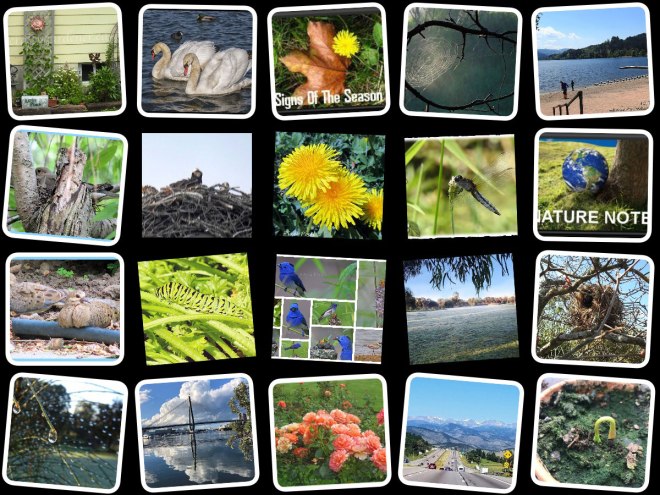
Below is last week’s Nature Notes’ blogger thumbnail photos in a collage. If your photos are protected and/or you don’t want me to use them, please let me know. Also listed are all the links to last week’s Nature Notes blog posts if you missed any.
| 1. | Karen, Pixel Posts | 7. | Sallie (Full Time- Life) | 13. | DEW |
| 2. | betty – NZ | 8. | Calendula | 14. | A Quiet Corner |
| 3. | Clouds on Water | 9. | orchid( Japan) | 15. | Linda aka Crafty Gardener |
| 4. | Shiju Sugunan | 10. | A spirit of simplicity | 16. | Vilt og vakkert |
| 5. | Pictografio | 11. | WEB | ||
| 6. | Pat — Colorado | 12. | FROSTY |
This post is about mallard ducks. Common and yet I have grown to love them over the past 15 years on the pond. We don’t have many nesting here now as the experienced mallards know about the snapping turtles here in the pond which puts all swimming waterfowl at risk.
When most people think of ducks, they think of the Mallard Duck. The Mallard is a common duck mostly found in North America, Europe, and Asia. The Mallard Duck is also found in Central America, Australia, and New Zealand. The scientific name for the Mallard Duck is Anas Platyrhynchos. It is part of the species of Dabbling Ducks.
How long does the mallard sit on her eggs?
As the last egg is laid, the female starts to incubate. She sits very tightly, and her brown plumage blends her perfectly to the background. She rarely leaves the nest apart from short breaks to feed and stretch her legs. it is a dangerous time and nesting hens may be killed on their nest. About 28 days later the eggs hatch together. This takes about 24 hours.

The Ducklings
Baby Mallards are called ducklings. A mother duck will usually lay around 10 or so eggs. She tends the eggs by herself in a nest. Shortly after the ducklings hatch out of the eggs, the mother duck will lead them to the water. From that point on, they usually do not return to the nest. Baby ducklings are ready to go within a few hours after they hatch. They can swim, waddle, feed themselves, and find food right away. Their mother will watch over them and help protect them for the next few months. After around two months, the ducklings can fly and will become independent.

What care does the Mallard Mama Give Her Ducklings?
The down of the ducklings is not naturally waterproof. They get the waterproofing for their down from their mother. She also protects her ducklings from attacks by other mallards. She leads them to places where they can feed.

What do they eat?
Mallards are omnivores. This means they eat both plants and other animals. They mostly feed off of the surface of the water eating all kinds of seeds, small fish, insects, frogs, and fish eggs. They also enjoy eating some human foods, often eating grain from human crops.

What sounds do they make?
Female Mallard ducks are famous for their “quack”. Females quack to call other ducks to them, usually their baby ducklings. This call is often termed the “hail call” or “decrescendo call”. The ducklings can hear this call for miles. The male makes a raspy “kwek” sound, not a quack.
Fun Facts About Mallard Ducks
- The male mallard is called a drake and the female a hen.
- Ducks may waddle along slowly, but they can fly pretty fast. At top speed they can hit 70 miles per hour!
- Mallards can fly nearly vertical, if needed. This includes taking off from the water almost straight up.
- It is estimated that there are over 10 million mallard ducks in North America.
- A group of ducks that are flying is called a flock, but when they are on the water the group is called a sord.

mallard duck and ducklings
What are you seeing in nature? It can be from your own backyard, the local park, out on a hike or anywhere. What plants and animals catch your interest? What do you find interesting in nature? Take a photo, write a post, a story, a poem, anything goes because I love to see what Mother Nature is up to in your area. PS..please check back and visit bloggers who post later in the week!——-

Have a wonderful week from Michelle
 ramblingwoods.com
You got some great ones!
I have never heard the word sord before or any term referring to a flock of birds of any sort. Love to learn new things.
I love ducks!
Lovely to see the mallard ducklings!
Juliet
http://craftygreenpoet.blogspot.com
I like watching mallards … and really all common birds. I haven’t much patience for birders who say “oh just a …(whatever, Robin, mallard, basically almost anything they’ve seen before)”. … it’s like they’re saying nature is only interesting if it’s new and different. I think that’s the wrong attitude. …… as always I appreciate your careful and well-shared research.
Thanks for all the fun info about these great creatures!
Lovely shots of these wonderful birds, Michelle!