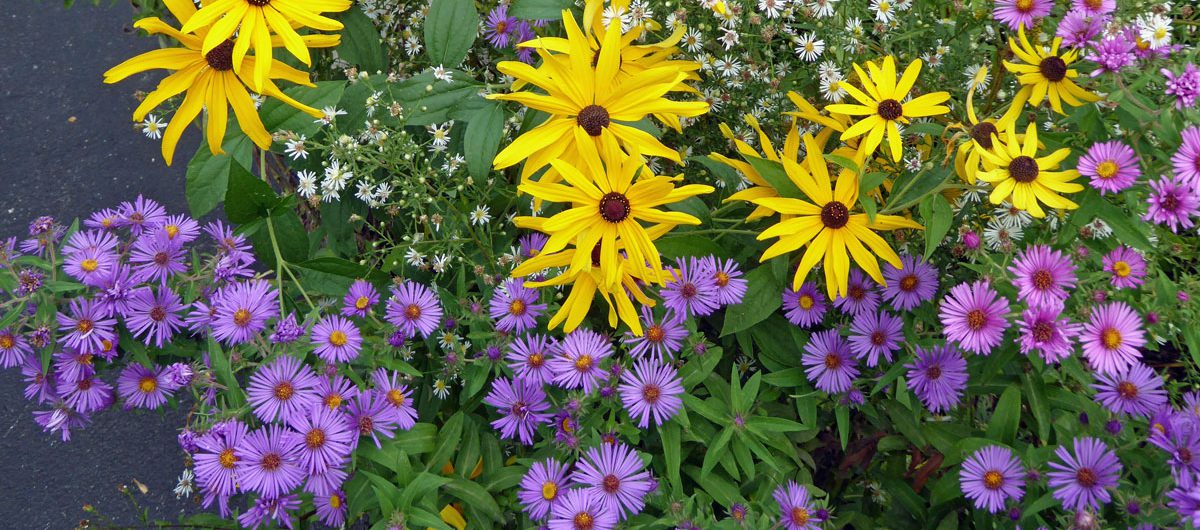

Join Nature Notes from Mondays at 11:00 pm EST to Friday at 11:00 pm EST.
More information can be found at the top of the blog on a separate page, but it really is easy. What are you or have you seen and enjoyed in nature? It can be from your own backyard, the local park, out on a hike, or anywhere. What plants and animals catch your interest? Do you garden? Have you read a good book on nature?
Write a blog post with a photo, a story, a poem, anything goes because I love to see what Mother Nature is up to in your area. Please submit one blog post per week and link it back to Nature Notes in some way.
Below is last week’s Nature Notes’ blogger thumbnail photos in a collage. If your photos are protected and/or you don’t want me to use them, please let me know. Also listed are all the links to last week’s Nature Notes blog posts if you missed any.
What are you seeing in nature? It can be from your own backyard, the local park, out on a hike or anywhere. What plants and animals catch your interest? What do you find interesting in nature? Take a photo, write a post, a story, a poem, anything goes because I love to see what Mother Nature is up to in your area. PS..please check back and visit bloggers who post later in the week!

| 1. | Nature Footstep | 7. | Pat — Colorado | 13. | viltogvakkert |
| 2. | Sallie (Full Time- Life) | 8. | Raquel | 14. | Junieper/ Jesh |
| 3. | Karen, Pixel Posts | 9. | Sherrie | 15. | PARKLANDS MORNING |
| 4. | Sky | 10. | A spirit of simplicity | 16. | FOGGY |
| 5. | betty – NZ | 11. | craftygreenpoet | 17. | Monika Ohson | Traveler In Me |
| 6. | orchid( Japan) | 12. | Birgitta B. |
Summer hot and humid back to cool and wet. Events have kept me awake at night. I go out early and drink my coffee and listen and watch and soak it in before the lawnmowers, weed whackers, and the traffic of the day gets going. I have no idea where these people are driving too as most things are not open. Maybe it makes you feel better just to drive.
Get out in nature…stop…listen..pay attention…soak it in…it helps..I know it does for me…
First red admiral butterfly sighting Red Admirals migrate!
“Red Admirals can’t survive in the cold. Each fall they flee south, spending the winter in the Carolinas, Georgia and other deep-south states. Like other butterfly species, they lay eggs, die and more are born. When spring comes, new generations begin migrating, repopulating northern states and even reaching Canada. Usually, it’s a migration that goes unnoticed by most people.” says Jeffrey Glassberg, president of the North American Butterfly Association (NABA)
Red Admiral-Vanessa atalanta

They might not be as big or as flashy as monarchs, but these little orangish-red and black butterflies are really neat. Here are things that make red admiral butterflies (Vanessa atalanta) unique:
1. They like stinging nettle.
We’ve all reached down to pull a weed and realized too late that it was a nettle. Your hand literally stings from the touch. However, red admiral caterpillars love nettles. It is their host plant.
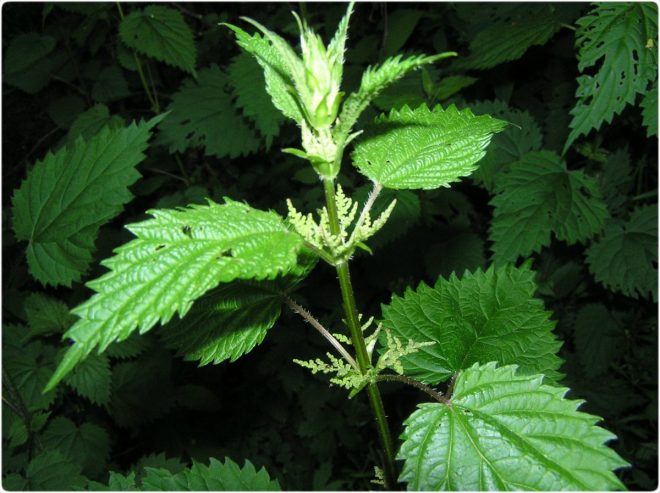
stinging nettle
Adult red admirals forage nectar from a variety of native flowers including asters, goldenrod, wild bergamot, milkweed and other butterfly favorites.
2. Red admirals are quite small but beautiful.
Monarch butterflies have a wingspan of 3.5-4 inches, whereas the red admiral wingspan can be as small as 1.75 inches wide.
They have scalloped black-brown wings with a reddish band on the forewing, for which it gets its name. On the underside, the butterfly has better camouflage and is mottled blue, black, brown and orange.
3. Red admirals also migrate.
Although they don’t migrate quite as far, red admirals also migrate from their northern-most regions — that can be as far north as Canada — to southern Texas to overwinter. However, some red admirals that live during the warm season in warm areas stay there through the winter as well.
4. Caterpillars nest.
We don’t often see caterpillars do anything but crawl and eat. However, red admiral caterpillars like to stay covered. Young caterpillars live in the shelter of folded leaves while older caterpillars will make a nest of leaves tied together with silk.
5. They might like you!
Red admirals are known as people-friendly, and they may actually land and perch on humans. Be careful if one is by you as to not harm it. If you want it to leave, gently blow near it to encourage it to fly away.
6. Red admirals are found around the world.
In addition to North America, red admirals also live in New Zealand, Europe, northern Africa, and Asia. They can survive in habitats from tundra to subtropics.
7. They are often mistaken for other butterflies.
The red admiral has more black than some other butterflies. It has a black upper forewing with a bright, diagonal red band that sometimes appears orange. It also has a red marginal band on its hindwing — the bottom wing. The lower hindwing — the underside or bottom of the lower wing — is mottled brown, black and tan.

Life History: The Red Admiral has a very erratic, rapid flight. Males perch, on ridgetops if available, in the afternoon to wait for females, who lay eggs singly on the tops of host plant leaves. Young caterpillars eat and live within a shelter of folded leaves; older caterpillars make a nest of leaves tied together with silk. Adults hibernate.

Red Admiral Egg- photo cc Todd Stout
Flight: Two broods from March-October in the north, winters from October-March in South Texas.

Red Admiral Larva Photo credit Bob Moul
Caterpillar Hosts: Plants of the nettle family (Urticaceae) including stinging nettle (Urtica dioica), tall wild nettle (U. gracilis), wood nettle (Laportea canadensis), false nettle (Boehmeria cylindrica), pellitory (Parietoria pennsylvanica), mamaki (Pipturus albidus), and possibly hops (Humulus).
Adult Food: Red Admirals prefer sap flows on trees, fermenting fruit, and bird droppings; visiting flowers only when these are not available. Then they will nectar at common milkweed, red clover, aster, and alfalfa, among others.

Red Admiral Pupa Photo credit Todd Stout
Habitat: Moist woods, yards, parks, marshes, seeps, moist fields. During migrations, the Red Admiral is found in almost any habitat from tundra to subtropics.
Range: Guatemala north through Mexico and the United States to northern Canada; Hawaii, some Caribbean Islands, New Zealand, Europe, Northern Africa, Asia. Cannot survive coldest winters; most of North America must be recolonized each spring by southern migrants.


Have a wonderful week from Michelle
 ramblingwoods.com
A very interesting post, red admirals are beautiful, we get them here too, though I haven’t seen one yet this year.
Juliet
http://craftygreenpoet.blogspot.com
Amazing critters!
Lovely! I like Admirals. WE have them here as well.
Thank you for this wonderful post full of information about this little butterfly. We also have them here in Ontario. I have lots of nettle around the property so I must keep an eye out for them around it.
I love the red admiral. We have it too. So far I have not seen it this season. But last year there were a lot of them.
Yes!! I get them here, Michelle but never knew what they were!! Thank YOU, again…:)jp
Red Admirals are beautiful butterflies! We usually see them in August.
In England it’s the opposite . . . Red Admirals are amongst our larger and more dramatic butterflies. There used to be lots where I lived in Coastal Dorset (before moving to Yorkshire) and I posted about them on my old Loose and Leafy in Dorset blog. In case you are interested, I will put a link below.
https://looseandleafy.blogspot.com/search?q=red+admiral
We don’t have Red Admirals here in Australia, Michelle, but they are very beautiful butterflies. We do have the Australian Painted Lady butterfly (Vanessa kershawi), which is related to it.
See: https://nixpixmix.blogspot.com/2014/01/everlasting-daisies-and-painted-ladies.html
I learned a lot Michelle. The life cycle of the Red Admiral was interesting and the 4 comparison pictures really helpful. I’m bookmarking this page as I am trying to learn more about butterflies.