
Join Nature Notes Sunday at 12:00 am EST to Friday at 11:00 pm EST. More information can be found at the top of the blog on a separate page, but it really is easy. What are you or have you seen and enjoyed in nature? It can be from your own backyard, the local park, out on a hike or anywhere. What plants and animals catch your interest? Do you garden? Have you read a good book on nature? Write a blog post with a photo, a story, a poem, anything goes because I love to see what Mother Nature is up to in your area. Please submit one blog post per week and link back to nature notes in some way.
Below are the participants from last week’s Nature Notes…Thank you…
| 1. | Pictografio | 4. | Day One | 7. | Birgitta B. |
| 2. | Pat — Anchorage, Alaska | 5. | A Quiet Corner | 8. | MOSS |
| 3. | Rqauel Jimenez Artesania | 6. | orchid( apan) | 9. | Mitzi Rice Digi Renderings |
—
Thank you for participating. I am having trouble leaving comments on Blogger blogs even after signing into my Blogger/Google account. I can do it on my MacBook with a different browser, but I can’t on my IPAD and I am having to do everything for now on the IPAD. I apologize. This has been the case for Blogger blogs for months. Also the verification of 4 or more choosing photos is getting more challenging as the photos are not clear. So thank you Google for the problems which is why I switched to WordPress 8 years ago.
It has been a very wet time. The 7th wettest September is being followed by a very wet October making it hard to get out with the camera as fall really sets in..
Along with the rain comes some very sad and sobering news about birds here in North America but this is happening all over the planet.
If you were alive in the year 1970, more than one in four birds in the U.S. and Canada has disappeared within your lifetime.
According to research published online in September by the journal Science, wild bird populations in the continental U.S. and Canada have declined by almost 30% since 1970.
“We were astounded by this net loss across all birds on our continent, the loss of billions of birds,” said Cornell Lab of Ornithology conservation scientist Ken Rosenberg, who led an international team of scientists from seven institutions in the analysis of population trends for 529 bird species.

90 percent of the missing birds came from just 12 families, and that they were all familiar, perchy, cheepy things such as sparrows, warblers, blackbirds, finches, larks, starlings, and swallows.

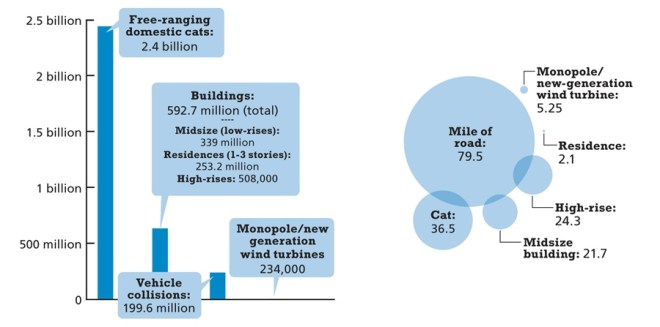
What Kills Birds
1) Make windows safer with products that prevent collisions.
2) Keep cats indoors (or walk them on a leash).
3) Choose native plants instead of lawns, to offer food and resting places for migrants.
4) Avoid pesticides.
5) Choose bird-friendly, shade-grown coffee that’s grown on farms that preserve bird habitat.
6) Reduce the use of plastics, and especially single-use plastics.
7) Watch birds and report what you see to help scientists track the surviving populations.
Ultimately, it will take political will and action to refill the emptied skies which really depresses me because the political will of the people in charge is not science based or humanity based and certainly is not interested in the environment or wildlife. So I do what I can do…I have to..I have grandchildren who will be living on this planet long after I am gone.

Nature walks are wonderful. But you don’t have to travel to special location to enjoy Mother Nature. There is so much to see in your own neighborhood or even in your own back or front yard. Get a guide-book of the wildlife in your area and learn the calls of birds and frogs and toads. So many times I hear a bird that lets me know what I am looking for in the trees.
Have a wonderful week from Michelle!
 ramblingwoods.com
Great post, it is sad to learn the birds are disappearing. Enjoy your day, wishing you a happy new week!
That is very bad news, Michelle. We are relatively lucky here in Australia, where our native birds are less threatened than in other parts of the world.
I have noticed great changes in the bird life in Hawaii. We left Hawaii in 1974 and returned in 2008. In that time the changes in wildlife itself was dramatic. We used to have a ton of monarch butterflies. Now I hardly ever see them. We suddenly have a dramatic increase in tiny finches all over the place, not to mention bulbuls which we didn’t have in 1974. I know we’ve lost a lot of the Hawaiian birds. It’s very sad.
It is so sad for the birds and it is not in the US. I am a little guilty because we have the domestic cats who really kill birds and eat them sometimes. There are those which come near the low thickets that allow cats catch them. By the way, i don’t know why i cannot put my link URL now, unlike the old times. The windows for linking do not appear.