
Join Nature Notes Tuesday at 12:00 am EST to Friday at 11:00 pm EST. More information can be found at the top of the blog on a separate page, but it really is easy. What are you or have you seen and enjoyed in nature? It can be from your own backyard, the local park, out on a hike or anywhere. What plants and animals catch your interest? Do you garden? Have you read a good book on nature?
Write a blog post with a photo, a story, a poem, anything goes because I love to see what Mother Nature is up to in your area. Please submit one blog post per week and link back to nature notes in some way.
| 1. | Sallie (Full Time- Life) | 5. | Birgitta | 9. | Aditya Narayan |
| 2. | Pictografio | 6. | MP Uppal | 10. | viltogvakkert |
| 3. | Day One | 7. | betty – NZ | ||
| 4. | orchid( Japan) | 8. | C for CREEK |
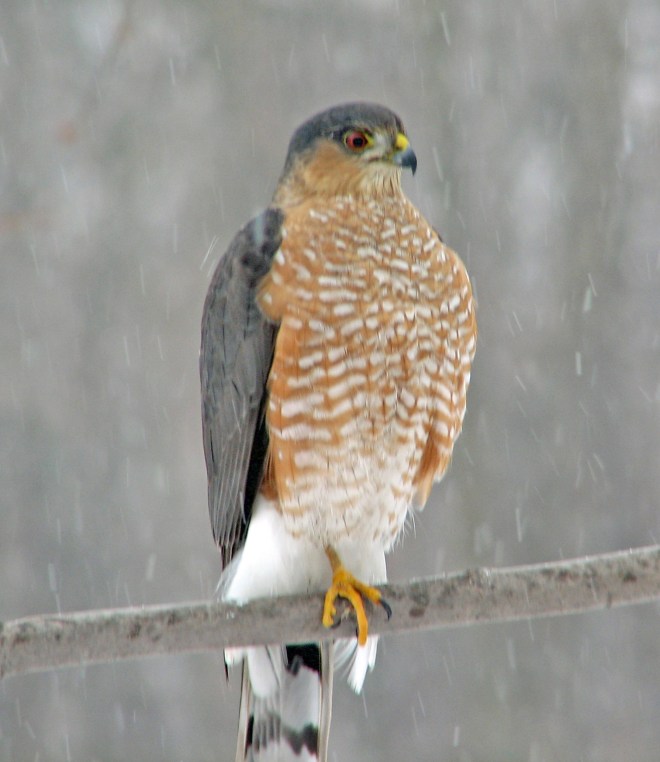
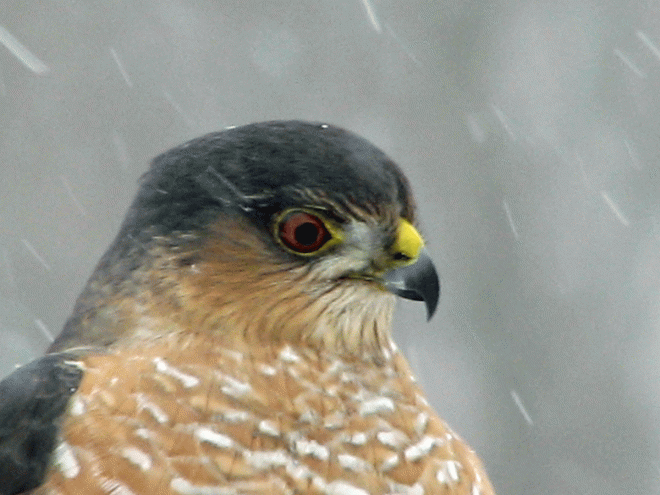
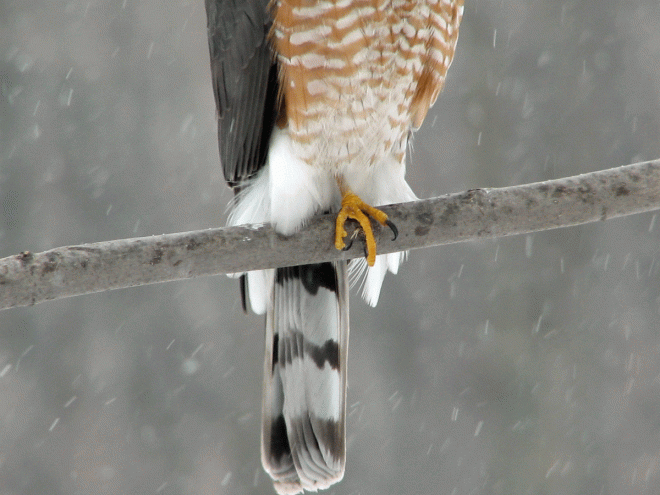
A sharp-shinned hawk hunting my yard.
CORNELL-A tiny hawk that appears in a blur of motion—and often disappears in a flurry of feathers. That’s the Sharp-shinned Hawk, the smallest hawk in Canada and the United States and a daring, acrobatic flier. These raptors have distinctive proportions: long legs, short wings, and very long tails, which they use for navigating their deep-woods homes at top speed in pursuit of songbirds and mice. They’re easiest to spot in fall on their southward migration, or occasionally at winter feeders.
Sharp-shinned Hawk numbers declined during the DDT pesticide years (mid-1940s to 1972), but rebounded after DDT was banned.
Sharp-shinned Hawks migrate south out of Canada in the fall and are observed at hawk watches in very large numbers. The hawks follow similar landscape features and often are concentrated in certain areas. More than 11,000 Sharp-shinned Hawks were seen on one October day at Cape May Point, New Jersey.
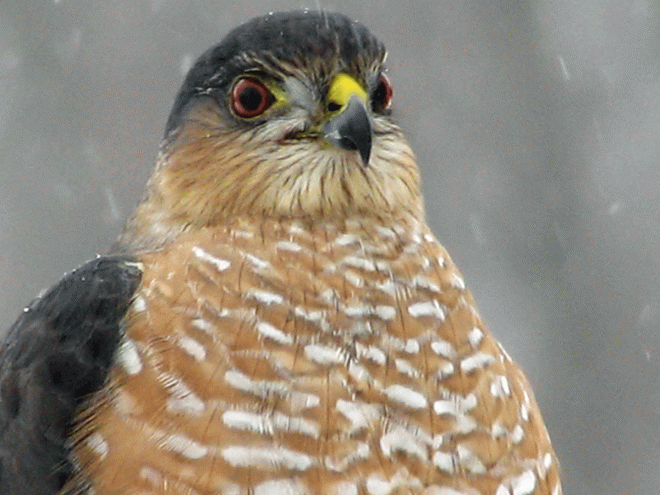
Female Sharp-shinned Hawks are about a third bigger and heavier than males. This is a typical pattern for many hawks and owls, but otherwise rare in the bird world.
The size difference between the sexes in Sharp-shinned Hawks influences the size of prey they can catch. Nestlings feed first on small prey caught mainly by their father, switching as they grow to the larger prey that their mother can bring. Before delivering prey to their mates or young, male Sharp-shinned Hawks typically remove and eat the head.
Adult Sharp-shinned Hawks continue to feed their offspring for several weeks after the youngsters have fledged. At first, they drop dead prey into the nest for the young to consume, but, as the fledglings gain skill, the parents switch to passing prey to the young hawks in flight. The parent approaches and calls, and the fledgling rises to grab prey out of its parent’s claws.
Rather like a cat’s claws, Sharp-shinned Hawks use their long toes and talons to impale and hold moving prey. They’ve even been known to reach into wire-mesh bird traps to grab prey with their toes.
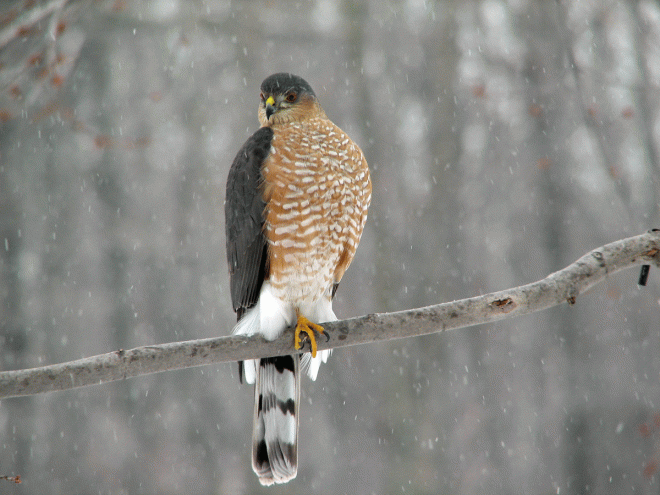
Sharp-shinned Hawks carry their prey to a stump or low branch to pluck it before eating. Swallowing feathers is not normal for them, as it is for owls.
The oldest recorded Sharp-shinned Hawk was a male, and at least 12 year, 2 months old when he was recaptured and rereleased during banding operations in Minnesota in 2009. He had been banded in the same state in 1999.

Nature walks are wonderful. But you don’t have to travel to special location to enjoy Mother Nature. There is so much to see in your own neighborhood or even in your own back or front yard. Get a guide-book of the wildlife in your area and learn the calls of birds and frogs and toads. So many times I hear a bird that lets me know what I am looking for in the trees.
 ramblingwoods.com
Amazing creatures and captures!!!
PS Congrats on the new grandbun coming!!
He’s a beauty! I think we saw one at the Raptor Center we visited in Oregon last summer.
wonderful shots of hawk
Michelle – I don’t like to think of my little birds at the bird feeders as dinner for a hawk, but I sure would give a lot to see one of these fellows in action! Great information and pictures to boot!
What magnificent creature this is Michelle! Beautiful photos too.
PS: Thanks for hosting!
Your captures are so clearcut and beautiful. Thanks for the info about this grand bird!
Oh what beautiful captures!